This Is What Happens When You Chase Light at the Edge of the World
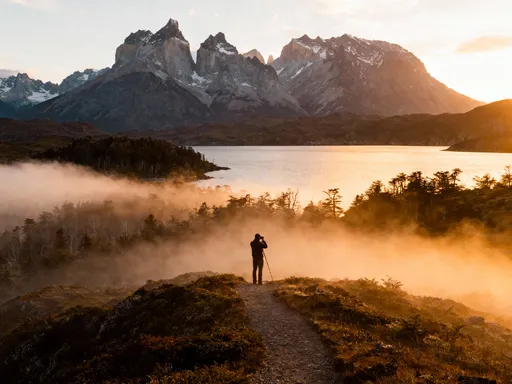
Standing at the southern tip of South America, Ushuaia isn’t just a destination—it’s a mood. One glance at the jagged peaks cutting into the sky, mirrored in glassy fjords, and I knew: this place was made for photographers. The way the light dances here—especially in golden hour—is unlike anything I’ve seen. Between misty trails, glacial lakes, and skies that glow long after sunset, every turn feels like a postcard come to life. If you're chasing raw, untouched natural beauty through your lens, Ushuaia should be next on your list.
Arrival in the Southernmost City on Earth
Perched on the shores of the Beagle Channel, Ushuaia claims the title of the southernmost city in the world—a distinction that carries both geographic weight and emotional resonance. As travelers step off the plane or arrive by road from the north, the first impression is one of quiet drama. Snow-dusted peaks of the Martial Mountains rise behind the town, their rugged silhouettes softened by low-hanging clouds that drift like breath across the valleys. The city itself, nestled between mountain and water, blends practicality with charm: brightly painted wooden houses cling to hillsides, and the crisp air carries a faint scent of pine and saltwater.
This remote outpost, located in Argentina’s Tierra del Fuego province, serves as the gateway to some of the most pristine wilderness on the continent. Its isolation is not a drawback but a defining feature. Far from the noise and light pollution of major urban centers, Ushuaia offers an atmosphere of stillness that heightens the senses. For photographers, this means clarity in the air, vivid contrasts in the landscape, and an almost meditative quality to the light. There’s a sense of being at the edge—not just of a country, but of the known world.
The town’s role as a launchpad for exploration cannot be overstated. From here, visitors set out for national parks, glacier treks, and maritime excursions into the subantarctic wilds. Yet even within the city limits, opportunities for compelling photography abound. The port area, with its docked boats and distant views of Chilean mountains across the channel, provides a dynamic interplay of human activity and natural grandeur. Early morning strolls along the waterfront reveal reflections of alpine peaks shimmering in calm waters, a preview of the visual richness that lies beyond the city’s edge.
The Magic of Golden Hour in Subantarctic Light
In Ushuaia, light behaves differently. Due to its extreme southern latitude—just 6 degrees from the Antarctic Circle—the sun travels a shallow arc across the sky, especially during the shoulder seasons of autumn and spring. This results in prolonged periods of golden hour, where the sun hovers near the horizon for hours, casting a soft, golden glow that wraps the landscape in warmth. Unlike the fleeting golden moments found in more temperate zones, here the illumination lingers, giving photographers an extended window to capture depth, texture, and emotion in their images.
The quality of this light is remarkable. Shadows are gentle, contrasts are muted, and colors take on a painterly richness. Reds, oranges, and deep yellows bathe the treetops, rock faces, and water surfaces in a way that feels almost otherworldly. This is particularly evident in late afternoon and early evening, when the sun dips behind the Martial Mountains, setting the sky ablaze while the valleys below remain bathed in amber light. The effect is amplified by the region’s frequent mist and low cloud cover, which diffuse the sunlight into a luminous haze, ideal for atmospheric and emotive photography.
For those seeking the perfect golden hour shot, several locations stand out. The shores of Lake Fagnano, a massive glacial lake stretching eastward from the city, offer expansive views with minimal obstructions. Arriving an hour before sunset allows time to scout compositions featuring mirrored mountain reflections in the still water. Similarly, the coastal path near Playa Larga provides unobstructed westward views, making it an excellent spot for capturing the sun’s descent over the Beagle Channel. Even the roadside pull-offs along Route 3 yield unexpected opportunities—sudden clearings in the forest revealing golden-lit meadows or distant glacial valleys bathed in late-day radiance.
Photographers should also consider the unique conditions of the austral summer, when daylight can extend well past 10 p.m. During this time, the concept of ‘golden hour’ expands into a ‘golden twilight,’ where the sky remains illuminated long after sunset. This phenomenon, known locally as the ‘white nights,’ allows for creative experimentation with long exposures and nightscapes that still retain color and detail. A tripod becomes essential, but the results—ethereal images of silhouetted trees against glowing skies or star trails beginning to emerge in deep blue hues—are well worth the effort.
Tierra del Fuego National Park: A Wild Photographer’s Playground
Just 12 kilometers west of Ushuaia lies Tierra del Fuego National Park, a protected expanse of raw, untamed beauty that spans over 60,000 hectares. This is where the Andes meet the sea, creating a dramatic convergence of ecosystems. Within its boundaries, visitors encounter ancient beech forests, peat bogs carpeted with moss and lichen, rushing rivers fed by mountain snowmelt, and rugged coastlines where the Atlantic and Pacific Oceans collide. For photographers, the park is a treasure trove of visual diversity, offering endless opportunities to capture the interplay between land, water, and sky.
One of the most accessible and visually rewarding trails is the Paseo Costero, a relatively flat path that follows the southern edge of the park along the Beagle Channel. This route provides consistent access to waterfront vistas, where rocky outcrops jut into the water and seabirds wheel overhead. The trail is especially photogenic in the early morning, when fog often rolls in from the channel, wrapping the forest in a dreamlike veil. Backlighting through the trees creates striking silhouettes, while droplets clinging to leaves after a light rain add detail and texture to close-up compositions.
Further inland, the Ensenada Bay viewpoint offers a panoramic perspective of the surrounding mountains and water. From this vantage point, photographers can capture sweeping wide-angle shots or use telephoto lenses to isolate distant peaks mirrored in the bay’s surface. The area is also prime habitat for wildlife, including guanacos—graceful camelids native to the region—that are often seen grazing in open meadows. Capturing these animals in their natural environment requires patience and a respectful distance, but the resulting images convey a powerful sense of wildness and freedom.
Birdlife is another highlight. Andean condors, with their impressive nine-foot wingspans, can occasionally be spotted soaring above the cliffs, riding thermal currents with effortless grace. While they are elusive, a long lens and a steady hand can yield breathtaking images of these majestic birds in flight. Smaller species, such as the blackish oystercatcher and the kelp goose, are more commonly seen along the shorelines, offering opportunities for intimate portraits against the backdrop of crashing waves and tidal pools.
The forest interiors present yet another dimension of visual storytelling. The lenga and ñire beech trees, twisted by wind and age, create natural frames and leading lines that guide the eye through the frame. Dappled light filters through the canopy, casting intricate patterns on the forest floor. Close-up photography reveals the textures of moss-covered bark, lichen in shades of gold and green, and delicate fungi sprouting from decaying wood. These details, often overlooked, contribute to a richer narrative of the ecosystem’s complexity and resilience.
Glacier Photography on the Martial Glacier Hike
For those willing to lace up their boots, the hike to the Martial Glacier offers one of the most rewarding photographic experiences near Ushuaia. The trail begins just outside the city and ascends steadily through alpine terrain, gaining approximately 600 meters in elevation over a round-trip distance of about 9 kilometers. While moderately strenuous, the path is well-marked and accessible to most fitness levels, making it a popular choice for both casual hikers and serious photographers.
As the trail climbs, the views behind expand with each switchback. The city of Ushuaia gradually unfolds below, its colorful buildings contrasting with the dark waters of the Beagle Channel. On clear days, the panorama includes the distant peaks of Navarino Island across the water, their snow-covered summits glowing under the sun. These sweeping cityscape and seascape compositions are ideal for wide-angle lenses, particularly when framed with foreground elements like native grasses or weathered rock formations.
Reaching the glacier itself is a moment of awe. The Martial Glacier, though modest in size compared to Patagonia’s larger ice fields, is a striking presence—a river of ice clinging to the mountain’s upper slopes. Its surface is textured with crevasses, seracs, and meltwater channels that glisten in the sunlight. At the glacier’s toe, small pools of meltwater form temporary lakes, their surfaces reflecting the sky and surrounding peaks with mirror-like clarity. These reflective pools are perfect for creating symmetrical compositions, especially when the wind is calm and the water is still.
Photographing ice formations requires attention to detail and lighting. Early morning light, when the sun strikes the glacier at a low angle, enhances texture and depth, revealing the subtle blues and grays within the ice. A polarizing filter can help reduce glare and deepen the sky, while a neutral density filter enables longer exposures that smooth out rippling water for a dreamy effect. Because weather conditions can change rapidly, it’s wise to carry a range of lenses—from wide-angle for landscapes to telephoto for isolating ice patterns or distant condors circling overhead.
Equally important is protecting gear from the elements. Sudden rain, snow, or wind is common at this elevation, so waterproof cases, lens hoods, and moisture-absorbing packets are essential. Layering clothing is crucial not just for comfort but for stability—holding a camera steady is far easier when hands are warm and dry. Many photographers choose to make the ascent early in the day to avoid afternoon cloud buildup, ensuring clearer skies and better light for the return descent.
Capturing the Beagle Channel: Water, Sky, and Silence
No photographic journey to Ushuaia is complete without experiencing the Beagle Channel from the water. Boat excursions—ranging from small zodiacs to larger cruise vessels—provide a unique vantage point for capturing the region’s maritime landscape. As the vessel glides across the channel, the shoreline unfolds in a continuous panorama of forested cliffs, rocky islets, and distant glaciers. The interplay of light on water, especially during golden hour, creates an ever-changing canvas of reflections, ripples, and shadows.
Several cruise options cater specifically to photographers, offering slower routes, extended stops, and expert guidance on optimal shooting positions. These tours often include visits to key landmarks such as Les Eclaireurs Lighthouse, nicknamed the ‘Lighthouse at the End of the World,’ and the islands of Gable and Bridges. Each stop presents new opportunities: sea lion colonies basking on rocky outcrops, cormorant nests clinging to sea cliffs, and kelp forests swaying beneath the surface. Capturing wildlife in motion—such as sea lions diving or birds taking flight—requires fast shutter speeds and continuous shooting mode, but the results can be dynamic and full of life.
Shooting from a moving platform introduces challenges, but also creative possibilities. To minimize blur, photographers should use faster shutter speeds (1/500 second or higher) and image-stabilized lenses. Positioning near the center of the boat reduces motion, and bracing against a railing or post adds stability. Polarizing filters are particularly effective here, cutting through surface glare and enhancing the contrast between water and sky. When the sun is low, the channel can transform into a ribbon of molten gold, its surface broken only by the wake of the boat—an ideal subject for long exposures that smooth the water into a glassy sheen.
The silence between engine cuts is perhaps the most profound aspect of these journeys. In those moments, the only sounds are the lap of waves and the cry of distant birds. It’s during these pauses that the landscape feels most alive, inviting contemplative photography—images that convey not just what is seen, but what is felt. A lone tree on a distant shore, a flock of birds crossing the frame, or the subtle gradation of color in the evening sky can become powerful symbols of solitude and endurance.
Weather as a Creative Partner, Not an Obstacle
Ushuaia’s weather is famously unpredictable. It’s not uncommon to experience sunshine, rain, wind, and snow—all within a single afternoon. While this volatility can be daunting, it also presents unique creative opportunities. Rather than viewing storms or fog as disruptions, photographers can embrace them as essential elements of the region’s character. Moody skies, rolling mist, and rain-slicked surfaces add emotional depth and narrative tension to images, transforming ordinary scenes into cinematic moments.
Fog, in particular, is a powerful compositional tool. When it rolls in from the channel or settles in the valleys, it simplifies complex landscapes, reducing them to layers of light and shadow. Distant peaks vanish into the haze, creating a sense of mystery and scale. Trees emerging from the mist become natural focal points, their forms accentuated by backlighting or rim lighting. Black-and-white conversions often enhance these scenes, emphasizing contrast and texture while stripping away distractions.
Rain, too, can elevate photography when approached with the right mindset. Wet surfaces reflect light in unexpected ways—puddles become mirrors, rocks glisten, and foliage takes on a saturated richness. A simple rain cover for the camera allows for continued shooting, and the use of a microfiber cloth ensures lenses stay clear between shots. Overcast skies, often dismissed as ‘flat,’ actually provide even, diffused lighting that minimizes harsh shadows—ideal for forest interiors, close-ups, and portraits of the landscape.
Wind presents its own set of challenges, particularly for long exposures or telephoto shots. Using a tripod with added weight (such as a camera bag hung from the center column) increases stability. In extreme conditions, seeking shelter behind natural windbreaks—like boulders or dense thickets—can make the difference between a shaky image and a sharp one. Yet wind also brings movement: waves crashing against cliffs, trees swaying in rhythmic patterns, or clouds racing across the sky. These dynamic elements can be captured with intentional motion blur, adding energy and life to a composition.
Ultimately, adapting to Ushuaia’s weather means embracing flexibility. Checking forecasts regularly, packing layers, and having backup plans for indoor or sheltered locations ensures that no day is wasted. The most memorable images often come not from perfect conditions, but from the ability to respond creatively to what nature provides.
Beyond the Lens: Why These Images Stay With You
Photographing Ushuaia is more than a technical exercise—it’s an emotional journey. The images captured here linger not just in albums, but in memory, because they reflect a deeper connection to the natural world. In a landscape so vast and untamed, the act of framing a scene becomes a form of reverence. Each photograph is a quiet acknowledgment of beauty, fragility, and timelessness.
These visuals also carry a subtle message of conservation. Tierra del Fuego’s ecosystems are delicate, shaped by millennia of isolation and adaptation. As more travelers seek out remote destinations, the responsibility to protect them grows. Photographers, as storytellers, have a unique role in raising awareness—not through words, but through the power of imagery. A single photo of a guanaco standing at the edge of a misty plain, or a glacier retreating into the mountains, can inspire reflection and action in ways that statistics cannot.
On a personal level, photographing in such extreme conditions fosters growth. It teaches patience, resilience, and presence. Waiting for the perfect light, adjusting to sudden weather shifts, and learning to see beauty in imperfection—all of these experiences shape not just the photographer’s eye, but their spirit. The challenges of the environment become lessons in adaptability and humility.
For women in their 30s to 55s—many of whom balance family, work, and personal aspirations—Ushuaia offers a rare opportunity to reconnect with themselves. The solitude of the trails, the rhythm of the waves, the quiet of the forest—these moments provide space to breathe, to reflect, to create. And when they return home, their photographs are not just souvenirs, but testaments to courage, curiosity, and the enduring power of nature to heal and inspire.
If you’ve ever felt the pull of distant horizons, if you’ve dreamed of capturing light in its purest form, then Ushuaia awaits. It is not an easy destination, nor is it meant to be. But for those willing to chase the light at the edge of the world, the rewards are immeasurable. Bring your camera, your curiosity, and your sense of wonder. The southernmost city on Earth will welcome you—not with fanfare, but with silence, sky, and the quiet glow of a world still wild.