You Won’t Believe What I Found Driving Through Mykonos’ Wild Side
Ever thought Mykonos was just beaches and nightlife? Hold up—driving through its rugged backroads revealed something totally unexpected. I stumbled upon protected landscapes so raw and untouched, they felt like secrets the island didn’t want to share. From hidden coves to wind-swept highlands, self-driving opened doors maps don’t show. This isn’t the postcard Mykonos—it’s the real one. And trust me, it’s absolutely worth the journey.
The Myth of Mykonos – Beyond the Postcard Perfection
When most travelers think of Mykonos, they picture whitewashed buildings with cobalt doors, crowded beach clubs pulsing with music, and yachts bobbing in the harbor of Mykonos Town. The island has earned its reputation as a glamorous Aegean hotspot, drawing sun-seekers, fashion lovers, and partygoers from around the world. Its fame is built on style, energy, and the golden glow of a Mediterranean summer that never seems to end. But beneath this polished surface lies a quieter, wilder Mykonos—one that exists beyond the Instagram frames and tourist brochures.
What many visitors don’t realize is that only a fraction of the island is developed for tourism. The rest—vast stretches of rocky terrain, coastal cliffs, and arid hills—remains deliberately untouched. These areas are not hidden due to neglect, but by design. Mykonos is home to several protected natural zones, some designated under the European Union’s Natura 2000 network, which safeguards habitats of ecological importance. These regions are preserved not for photo opportunities, but for the delicate balance of native species and ecosystems that thrive in this harsh yet beautiful environment.
The contrast between the island’s two identities could not be starker. In the north and west, luxury resorts and buzzing tavernas line the coast, while in the south and interior, silence reigns. There are no souvenir shops, no sunbed rentals, no music spilling from speakers—just wind, stone, and the occasional cry of a seabird overhead. This is the Mykonos few see, not because it’s inaccessible, but because it’s overlooked. The myth of Mykonos as a nonstop celebration overshadows its quieter truth: this is an island shaped as much by nature as by culture.
By venturing beyond the well-trodden paths, travelers gain access to a more authentic narrative—one where the rhythm of life is set by tides and seasons, not by DJ sets and happy hours. Self-driving becomes a gateway to this other side, offering the freedom to explore at one’s own pace and on one’s own terms. It allows visitors to witness the island not as a destination to be consumed, but as a living landscape to be respected and appreciated.
Why Go Off-Road? The Freedom of Self-Driving in Mykonos
One of the greatest advantages of visiting Mykonos with a rental car is the ability to escape the constraints of public transportation. While buses do operate between major towns and beaches, their routes are limited and their schedules infrequent. They rarely, if ever, reach the island’s most remote coastal edges or inland highlands. For those seeking solitude or natural beauty off the tourist trail, a car is not just convenient—it’s essential.
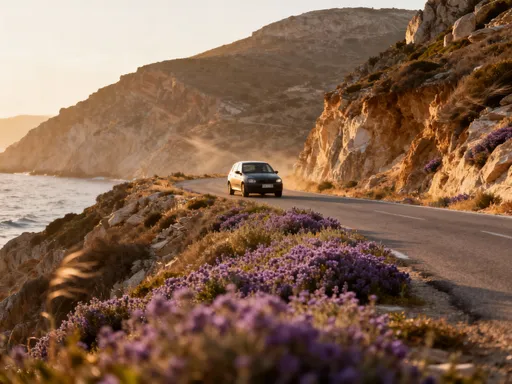
Driving through Mykonos offers a sense of discovery that few other modes of travel can match. The narrow, winding roads—some paved, others made of packed gravel—invite curiosity. Each turn reveals a new vista: a hidden cove framed by volcanic rock, a field of wildflowers swaying in the breeze, or a centuries-old stone shepherd’s hut tucked into a hillside. There’s a thrill in navigating these routes, knowing that you’re venturing where few tour groups go and where the landscape remains unaltered by mass tourism.
Road conditions vary across the island. Along the main arteries connecting towns like Ano Mera and Platis Gialos, surfaces are smooth and well-maintained. But once you turn onto secondary roads—especially those leading to southern capes or inland plateaus—the terrain becomes more challenging. Unpaved paths can be bumpy, particularly after rain, and some routes are best suited for compact SUVs or vehicles with higher clearance. That said, most rental agencies offer suitable options, and local drivers are accustomed to the island’s unique topography.
Driving also allows for spontaneity. You can pause at a scenic overlook without worrying about missing a bus, pull over to photograph a flock of flamingos in a saltwater lagoon, or spend an extra hour watching the sunset from a deserted beach. This autonomy transforms the journey into an experience in itself. Rather than rushing from one attraction to the next, you begin to notice details—the scent of thyme in the air, the texture of sun-baked stone, the way light shifts across the sea in late afternoon. These moments, fleeting and unscripted, are what make self-driving so rewarding.
Moreover, the act of driving through Mykonos fosters a deeper connection to the land. You’re not just passing through—you’re engaging with the island’s geography, learning its contours, and understanding its rhythms. This kind of travel encourages mindfulness, inviting you to slow down and observe rather than simply consume. For travelers who value authenticity over convenience, the open road offers the most honest way to encounter Mykonos.
Mykonos’ Protected Areas – A Hidden Natural Treasure
Beneath its cosmopolitan exterior, Mykonos is a sanctuary for biodiversity. The island hosts several protected natural areas, many of which fall under the Natura 2000 network—a European-wide initiative to conserve habitats and species at risk. These zones are not marked by grand entrances or visitor centers; instead, they blend seamlessly into the landscape, protected by regulation and respect. Their existence is a testament to the island’s dual identity: a place of celebration and serenity, of human energy and ecological resilience.
One of the most significant protected regions lies along the southern and southwestern coasts, where rugged cliffs and isolated inlets provide refuge for seabirds, marine life, and rare plant species. These areas are critical breeding grounds for birds such as the Eleonora’s falcon and the Yelkouan shearwater, both of which are sensitive to human disturbance. Coastal scrublands support endemic flora, including the Mykonos daisy and various aromatic herbs that thrive in dry, rocky soil. These ecosystems may appear sparse at first glance, but they are finely tuned to the island’s climate and play a vital role in preventing erosion and maintaining ecological balance.
In addition to coastal zones, parts of the island’s interior are also protected. These include low-lying hills and dry valleys that serve as buffer areas between developed regions and natural habitats. They are home to reptiles like the Balkan green lizard and amphibians such as the European tree frog, both of which depend on seasonal wetlands that form after winter rains. These inland areas also preserve remnants of traditional land use, such as dry stone walls and ancient terraces, which once supported small-scale farming and grazing.
What makes these protected areas so special is their lack of commercialization. Unlike national parks in some countries, they are not designed for mass visitation. There are no ticket booths, no guided tours, and no souvenir stands. Access is permitted, but with the understanding that visitors must tread lightly. Signs in Greek and English remind travelers to stay on marked paths, avoid picking plants, and keep noise to a minimum. These rules are not suggestions—they are legally enforced to ensure the long-term survival of these fragile environments.
For the mindful traveler, visiting these zones is a privilege. It offers a rare opportunity to witness nature in its undisturbed state, to hear the wind instead of music, and to see the island as it existed long before tourism arrived. It’s a humbling experience, one that shifts perspective from consumption to conservation. In a world where so many destinations are altered beyond recognition, Mykonos’ protected areas stand as quiet reminders of what can be preserved when care and responsibility guide our footsteps.
Agios Sostis & the Southern Shores – Quiet Beauty Off the Beaten Path
One of the most striking examples of Mykonos’ hidden beauty lies in the remote southern region near Agios Sostis. Accessible only by car, this area feels worlds away from the island’s lively north. The drive itself is part of the experience—winding roads cut through arid hills, offering panoramic views of the Aegean Sea stretching endlessly to the horizon. As you descend toward the coast, the landscape opens up, revealing a crescent-shaped bay with turquoise waters and a scattering of weathered wooden fishing boats pulled ashore.
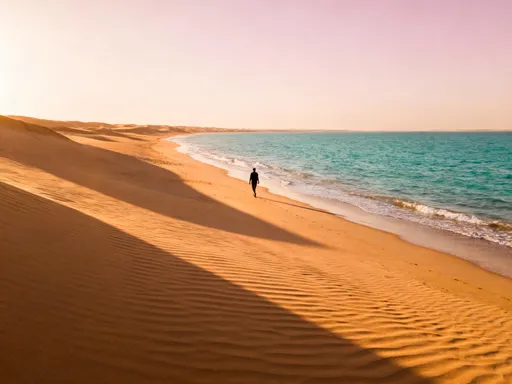
Agios Sostis is not a resort. There are no hotels, no sunbeds, and no music. Just a single family-run taverna, open only in season, serving simple dishes like grilled octopus, tomato fritters, and local cheese. The beach is undeveloped, with no umbrellas or loungers—only smooth stones and patches of sand warmed by the sun. Visitors sit on the rocks or bring their own mats, enjoying the stillness and the clarity of the water. It’s the kind of place where time slows, and the mind begins to unwind.
What makes this area particularly special is its ecological significance. The surrounding coastline includes protected zones where monk seals—rare and endangered marine mammals—have occasionally been spotted in recent decades. While sightings are extremely rare, the presence of suitable habitat indicates that these waters remain relatively undisturbed. Cliffs along the shore provide nesting sites for seabirds, and the shallow bays serve as nurseries for fish and crustaceans. Even the seagrass meadows below the surface play a crucial role in carbon sequestration and marine biodiversity.
Scattered along the hills above the bay are the ruins of old windmills, their whitewashed walls peeling, their sails long gone. These structures once harnessed the island’s strong winds to grind grain, a testament to the ingenuity of past generations who lived in harmony with the environment. Today, they stand as silent sentinels, watching over a landscape that has changed little in centuries. Walking among them, you can almost hear the creak of wood in the wind and imagine the rhythm of a simpler life.
Visiting Agios Sostis is not about ticking off a checklist or capturing the perfect photo. It’s about presence—about feeling the breeze on your skin, listening to the waves, and recognizing the value of places that exist simply because they are allowed to. In a world that often equates worth with visibility, this quiet corner of Mykonos reminds us that some of the most meaningful experiences are found in stillness and simplicity.
The Northern Trails – Chasing Solitude Among Scrub and Stone
If the south of Mykonos offers coastal serenity, the northern interior reveals a different kind of beauty—one defined by isolation, resilience, and the quiet strength of the land. Here, the roads narrow and the vegetation thins, giving way to rocky outcrops, fields of wild thyme, and ancient stone walls that snake across the hills like veins. This is not a landscape shaped by tourism, but by time and tradition.
Driving through the northern trails, you’ll pass through areas like Asfali and Fokos, where the only signs of life are grazing goats, the occasional shepherd, and the faint scent of oregano carried on the wind. The terrain is unforgiving—dry, sunbaked, and exposed—but it supports a surprising variety of life. Lizards dart between rocks, bees hum among flowering herbs, and kestrels circle overhead, scanning the ground for movement. Every element of this ecosystem has adapted to survive with minimal water and intense sunlight, a testament to nature’s ingenuity.
These northern zones also serve an important ecological function. They act as buffer areas, separating developed regions from protected habitats. By limiting construction and preserving open space, they help maintain the island’s natural drainage patterns and prevent habitat fragmentation. They also protect archaeological sites—remnants of ancient settlements and burial grounds—that lie scattered across the landscape, often marked only by broken pottery and stone foundations.
One of the most profound moments I experienced in this region came during an early morning stop near a dry riverbed. With no one else in sight, I turned off the engine and stepped out. The silence was complete—no engines, no voices, no music. Just the soft rustle of leaves and the distant call of a bird. As the sun rose higher, the light transformed the hills, turning them from gray to gold. In that moment, I felt a deep sense of peace, not because anything dramatic had happened, but because I was simply present in a place that asked for nothing in return.
These northern trails are not for those seeking comfort or convenience. There are no restrooms, no cafes, and no marked trails. But for travelers willing to embrace simplicity, they offer something far more valuable: solitude, perspective, and a connection to the land that is increasingly rare in our connected world. Driving through them is not just a journey across geography—it’s a journey inward.
Responsible Exploration – How to Visit Without Harming
With the privilege of access comes responsibility. The beauty of Mykonos’ wild side lies in its untouched state, but that state is fragile. Increased visitation, even if well-intentioned, can lead to erosion, litter, and disturbance to wildlife. Therefore, ethical travel practices are not optional—they are essential to preserving these areas for future generations.
One of the most important rules is to stay on marked paths. While it may be tempting to wander off for a better view or a private photo, trampling vegetation can damage root systems and accelerate soil erosion, especially in arid environments where recovery is slow. Many trails are clearly defined for this reason, and deviating from them can have long-term consequences. If no path exists, it’s best to reconsider the approach or choose a different vantage point.
Littering is another critical issue. Even small items like food wrappers or plastic bottles can harm wildlife and pollute the environment. Always carry out what you bring in, and consider packing a small trash bag for any debris you might find along the way. Many local organizations run clean-up initiatives, and participating—even informally—can make a difference.
Wildlife should never be disturbed. This includes not feeding animals, keeping a safe distance from nesting sites, and avoiding loud noises. Seabirds, in particular, are sensitive to human presence during breeding season, and even brief intrusions can cause them to abandon their nests. Similarly, marine life in tidal pools should be observed without touching or removing organisms.
Respecting local conservation rules is equally important. Some areas may be temporarily closed for restoration or breeding seasons, and these restrictions should be followed without exception. Travelers should also be mindful of private property and traditional land uses, avoiding entry into fields or structures that are not open to the public.
Finally, timing matters. Visiting early in the morning or during the shoulder seasons—late spring or early autumn—reduces crowding and minimizes environmental impact. It also enhances the experience, offering cooler temperatures, softer light, and a greater chance of encountering wildlife. By choosing when and how to explore, travelers can enjoy the island’s wild side while helping to protect it.
Why This Side of Mykonos Matters – A Call for Deeper Travel
Discovering the hidden landscapes of Mykonos is more than just a travel experience—it’s a shift in perspective. It challenges the assumption that value lies only in what is marketed, photographed, or celebrated. Instead, it invites us to find meaning in what is quiet, unpolished, and enduring. This side of the island does not perform for visitors; it simply exists, and in that existence, it offers a powerful lesson about balance, resilience, and respect.
True travel enrichment does not come from checking off destinations, but from engaging with places on a deeper level. It comes from asking questions: What shaped this landscape? Who lived here before? What species depend on this habitat? These inquiries lead to greater understanding and, ultimately, to more responsible choices. When we travel with curiosity rather than convenience, we become stewards rather than spectators.
Mykonos’ wild side also reflects a broader need in modern travel—a return to authenticity. In an age of curated feeds and instant gratification, there is profound value in slowing down, disconnecting, and allowing a place to reveal itself on its own terms. The island’s protected areas are not attractions; they are invitations—to listen, to observe, and to reflect.
By choosing to explore beyond the postcard image, travelers contribute to a more sustainable and meaningful form of tourism. They support conservation efforts simply by valuing what is preserved. And they inspire others to do the same, creating a ripple effect that extends far beyond a single journey.
So the next time you plan a trip to Mykonos, consider leaving the guidebook behind. Rent a car, take the less-traveled road, and let the island surprise you. You may not find luxury loungers or cocktail menus, but you will find something rarer: silence, space, and the quiet pulse of nature. And in that discovery, you might just find a new way to travel—one that honors both the place and the journey.