You Gotta See This: Hobart’s Wild Heart in Its Protected Places
Tasmania’s capital isn’t just cute cafes and colonial charm—Hobart hides something wilder. Nestled between mountain and sea, its protected areas are raw, untouched, and absolutely breathtaking. I went looking for quiet trails, rare wildlife, and real nature—and found way more than I expected. From misty peaks to silent forests, these reserves aren’t just preserved land—they’re living, breathing escapes. If you’re after authentic adventure beyond the city buzz, this is where Tasmania truly comes alive.
Why Protected Areas Matter Around Hobart
Tasmania stands apart as one of Australia’s most ecologically unique regions, a living museum of ancient flora and fauna found nowhere else on Earth. At the heart of this natural legacy are the protected areas surrounding Hobart, carefully preserved landscapes that do far more than offer scenic views—they sustain life in its purest forms. These reserves serve as vital sanctuaries for endangered species such as the eastern quoll, once widespread across mainland Australia but now thriving only in Tasmania’s wild corners. The wedge-tailed eagle, with its nine-foot wingspan, soars above these lands, relying on undisturbed forests and open terrain for hunting and nesting. Protecting these habitats ensures that such iconic creatures continue to exist not just in textbooks, but in the wild, where they belong.
Beyond wildlife, these protected zones play a crucial role in maintaining clean water systems, healthy soils, and stable climates. The forests around Mount Wellington, for instance, filter rainwater that flows into Hobart’s reservoirs, supplying fresh drinking water to thousands of households. This connection between environmental health and human well-being is often invisible, yet deeply real. When visitors walk through these reserves, they’re not just enjoying nature—they’re benefiting from it in ways they may never realize. Conservation, then, isn’t just about saving trees or animals; it’s about sustaining the very systems that support life in and around the city.
The protection of these lands is the result of long-term collaboration between government agencies, Aboriginal communities, and local environmental groups. Through thoughtful planning and community stewardship, Tasmania has managed to preserve over 40% of its landmass as protected areas—a remarkable achievement by any standard. What makes this effort even more meaningful is its accessibility. Unlike remote wilderness zones that remain out of reach for most people, Hobart’s reserves are close enough to touch, just a short drive from downtown. This proximity allows residents and travelers alike to witness conservation in action, to understand its importance not through lectures, but through experience. It’s one thing to read about biodiversity; it’s another to hear a bird call you’ve never heard before, to see moss so thick it looks like velvet, to feel the cool air of an untouched forest on your skin.
And that’s where the real value lies—not just in the numbers or policies, but in the connection people form with these places. When a child sees a pademelon for the first time, or a visitor stands in awe at a cliff edge overlooking the Southern Ocean, something shifts. These moments plant seeds of care, inspiring people to protect what they’ve come to love. The protected areas around Hobart are not static monuments to nature; they are dynamic, evolving spaces where humans can learn, reflect, and grow. They remind us that we are not separate from the natural world, but part of it—and that our well-being is tied to its survival.
Mount Wellington: The Icon with Hidden Depths
Rising 1,271 meters above sea level, kunanyi / Mount Wellington is the silent guardian of Hobart, its snow-dusted peak visible from nearly every corner of the city. For many visitors, the summit is the destination—a panoramic viewpoint where the Derwent River curls like a ribbon and the Tasman Bridge glimmers in the distance. But beyond this postcard-perfect scene lies a far deeper wilderness, one that unfolds slowly to those willing to step off the main road and into the reserve’s hidden trails. The mountain is not just a landmark; it is a living ecosystem, home to alpine heathlands, ancient pencil pines, and rare cushion plants that have survived here for millennia.
While the Pinnacle Road leads most visitors to the summit, lesser-known paths like the Snug Tiers Track and the Quercus Grove Walk reveal a quieter, more intimate side of the mountain. The Snug Tiers, for instance, winds through dense eucalyptus forests where black currawongs call from high branches and wallabies dart between tree trunks. As the trail climbs, the forest gives way to open moorland, where wind-sculpted shrubs cling to rocky outcrops and lichens paint the boulders in shades of orange and gray. In spring, this landscape bursts into color with native wildflowers—purple eyebright, yellow cushion bush, and the delicate white blooms of mountain rocket. Each season transforms the mountain anew, offering a different kind of beauty: winter brings frost-covered ferns and icy gullies, while summer warms the granite slabs, inviting hikers to rest and take in the silence.
One of the most striking aspects of kunanyi is its cultural significance. For the Palawa people, the original custodians of lutruwita (Tasmania), the mountain has long been a place of spiritual importance. The dual naming—kunanyi / Mount Wellington—reflects a growing recognition of this deep connection, one that predates European settlement by thousands of years. Interpretive signs along certain trails share stories and knowledge from the Muwinina people, offering visitors a chance to understand the land not just as a scenic backdrop, but as a living cultural landscape. This awareness adds a layer of meaning to every hike, turning a simple walk into a journey through time.
Despite its popularity, the mountain remains remarkably wild. There are no cable cars, no commercial developments at the summit—just a visitor center, a café, and trails that lead into the quiet heart of the reserve. This restraint is intentional, part of a broader effort to balance access with preservation. Dogs are not allowed, drones are restricted, and campfires are prohibited, all to protect the fragile alpine environment. The result is a rare kind of urban-adjacent wilderness, where city dwellers can find true solitude within minutes of home. Whether you’re watching the sunrise from the summit, listening to the wind whistle through the dolerite columns, or simply breathing air that feels cleaner and colder than anywhere else, kunanyi offers a powerful reminder of nature’s grandeur and resilience.
Bruny Island: A Sanctuary of Sea and Forest
Just a short ferry ride from Kettering, south of Hobart, Bruny Island feels like stepping into another world—one shaped by wind, salt, and time. This slender island, split into North and South by a narrow isthmus known as The Neck, is home to some of Tasmania’s most pristine coastal ecosystems. South Bruny National Park covers much of the southern half, protecting rugged cliffs, secluded bays, and forests that have stood for centuries. It’s a place where the Southern Ocean crashes against dolerite shores, where kelp forests sway beneath the waves, and where the calls of gannets and penguins echo through the dunes.
The island’s isolation has helped preserve its ecological integrity. Unlike more accessible coastlines that face pressure from development and tourism, Bruny remains relatively untouched, thanks in part to careful management and low-impact visitation. Walking through the national park, you’ll encounter ancient pencil pines, some of which are over 500 years old, growing in sheltered gullies where mist lingers long after sunrise. These slow-growing trees are relics of a cooler, wetter climate, survivors of an era when glaciers shaped the land. Seeing them in person is humbling—a reminder that some lives unfold on a timescale far beyond our own.
Along the coast, sea caves and blowholes carve dramatic patterns into the rock, shaped by centuries of wave action. The Adventure Bay cliffs, for example, reveal layers of geological history, with bands of quartz and dolerite telling stories of volcanic eruptions and tectonic shifts. Guided walks led by local eco-tour operators offer access to sensitive areas while ensuring minimal impact. These guides often share knowledge passed down through generations, blending scientific insight with personal connection to the land. They’ll point out the nesting sites of white-bellied sea eagles, explain how shell middens reveal ancient Aboriginal habitation, and show where little penguins come ashore at dusk—a moment of quiet magic that must be witnessed in silence and darkness to avoid disturbing them.
Equally important is the protection of the island’s dune systems, fragile networks of sand and vegetation that stabilize the coastline and provide habitat for rare plants and insects. Visitors are encouraged to stay on boardwalks and marked paths, especially in areas like The Neck, where boardwalks float above the sand to prevent erosion. Even small actions—like not feeding wildlife or leaving no trace—make a difference. The island’s beauty is not just in its views, but in its balance, a delicate equilibrium that requires care and respect. For travelers, Bruny offers more than scenery; it offers a lesson in coexistence, in how humans can visit without dominating, admire without taking.
The Forgotten Valleys: Exploring Lower Longley and Gordon River
Deep in Tasmania’s remote southwest, accessible only by boat or multi-day trek, lie some of the most untouched landscapes in Australia. The Lower Longley area and the Gordon River valley are part of a vast wilderness that has remained largely unchanged for thousands of years. These are not places you stumble upon; they require intention, preparation, and a willingness to leave modern comforts behind. But for those who make the journey, the reward is a landscape of eerie beauty—flooded gum forests where ancient trees rise from dark water, button grass plains stretching to the horizon, and silence so complete it feels sacred.
The Gordon River, in particular, is a place of profound stillness. Flowing through the heart of the Southwest National Park, a UNESCO World Heritage site, it winds through rainforest so dense that sunlight filters through in soft green patches. Mirror-like sections reflect the canopy above, creating the illusion of floating through a forest suspended in air. Boat tours from Strahan offer a glimpse into this world, gliding past Huon pines that are over 2,000 years old—some of the oldest living organisms on the planet. These trees grow at an almost imperceptible pace, adding a millimeter of girth per year, their roots entwined with the history of the land itself.
What makes this region so pristine is its inaccessibility. There are no roads, no power lines, no signs of industrial development. Entry is carefully managed to protect both the environment and the cultural heritage of the area. The southwest has been home to Aboriginal people for at least 35,000 years, and evidence of their presence—stone tools, ceremonial sites, and shell middens—can still be found in sheltered valleys. These sites are protected by law, and visitors are not permitted to disturb them. Instead, guided experiences focus on storytelling, allowing visitors to learn about the deep connection between the Palawa people and this land without compromising its integrity.
The ecological value of these valleys cannot be overstated. They serve as refuges for species that have vanished elsewhere, from the Tasmanian devil to the spotted-tailed quoll. The wetlands support a rich array of birdlife, including the endangered orange-bellied parrot, which migrates here each summer. Because human impact has been so limited, scientists study these areas to understand how ecosystems function in their natural state—a baseline against which other, more disturbed environments can be measured. For the average traveler, the experience is less about data and more about feeling—feeling small in the face of ancient trees, feeling awe at the clarity of the water, feeling gratitude for the chance to witness something so rare and unspoiled.
How to Visit Responsibly: Staying Light on the Land
With great beauty comes great responsibility. The very qualities that make Hobart’s protected areas so special—pristine ecosystems, rare wildlife, cultural significance—also make them vulnerable. Every footstep, every piece of litter, every off-trail detour can have lasting consequences. That’s why visiting these places requires more than just enthusiasm; it demands mindfulness. The good news is that responsible tourism doesn’t mean sacrificing experience. In fact, it often enhances it—by slowing you down, sharpening your attention, and deepening your connection to the land.
The first rule of responsible visitation is simple: stay on marked trails. These paths are designed to minimize erosion, protect plant life, and keep visitors away from sensitive habitats. Venturing off-trail, even to get a better photo, can damage fragile moss beds, disturb nesting birds, or accelerate soil loss on steep slopes. Similarly, packing out all waste—including food scraps and biodegradable items—is essential. What seems harmless, like an apple core, can introduce foreign seeds or attract pests that disrupt local ecosystems. Carrying a small trash bag and using designated bins ensures that nothing is left behind.
Fire safety is another critical consideration. Open fires are prohibited in most reserves, not just for safety, but because a single spark can ignite dry vegetation and spread rapidly in Tasmania’s often windy conditions. Even in permitted areas, visitors should use established fire rings and ensure fires are completely extinguished. Drones, too, are restricted in many parks, as their noise and movement can stress wildlife, particularly birds and mammals with young. If you’re unsure about regulations, check with Parks and Wildlife Service Tasmania before your trip.
Perhaps most important is the respect owed to cultural sites. Many of these landscapes hold deep significance for Aboriginal communities, and certain areas are not open to the public out of respect for tradition and privacy. Visitors should never touch, photograph, or enter restricted zones without permission. Instead, seek out guided tours led by Indigenous operators or accredited eco-guides who can share knowledge in a way that honors its origins. Supporting these services also contributes directly to local communities and conservation efforts. By choosing certified eco-tours, you’re not just seeing nature—you’re helping to protect it.
What You’ll Actually Experience: Sensory Moments That Stay
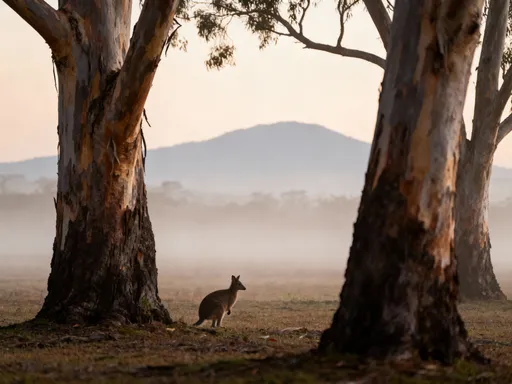
Beyond the facts and figures, beyond the maps and trail signs, what stays with you after visiting Hobart’s protected areas are the moments—the sensory impressions that imprint themselves on memory. It’s the soft thud of a pademelon hopping through the underbrush at dawn, its dark eyes catching the first light. It’s the way mist curls off the surface of Lake Gordon like breath rising from the earth, dissolving into the treetops. It’s the silence—not an absence of sound, but a presence so deep it seems to hum, broken only by the distant cry of a curlew or the rustle of a lizard in dry leaves.
These experiences are not passive. They engage all the senses, pulling you out of your thoughts and into the moment. The scent of damp eucalyptus after rain, the coolness of granite under your palms, the taste of clean air after climbing a ridge—these are the textures of true immersion. They shift your perspective, not through grand revelations, but through quiet accumulation. You begin to notice things you’d otherwise miss: the pattern of lichen on a rock, the way sunlight filters through a canopy in shifting gold patterns, the sound of your own breath syncing with the rhythm of the forest.
For many visitors, especially women between 30 and 55 who balance family, work, and personal well-being, these moments are more than scenic—they are restorative. In a world of constant demands and digital noise, the stillness of a protected reserve offers a rare kind of mental refreshment. It’s not about escaping life, but reconnecting with a deeper sense of self. Slow, mindful exploration—walking without a checklist, sitting without distraction, listening without agenda—becomes a form of self-care. You’re not just seeing nature; you’re being part of it, if only for a few hours.
And that’s where the transformation happens. It’s not measured in kilometers hiked or photos taken, but in the quiet certainty that some places are worth protecting—not just for wildlife, but for the human spirit. These reserves don’t just preserve ecosystems; they preserve wonder, awe, and the simple joy of being alive in a beautiful world. They remind us that we don’t need luxury or spectacle to feel fulfilled—just space, silence, and the courage to be still.
Why These Wild Spaces Define Hobart’s True Character
Hobart is often described in terms of its charm—the sandstone buildings, the bustling Salamanca Market, the cozy cafes serving single-origin coffee. But its true character lies beyond the postcard scenes, in the wild spaces that cradle the city like a secret. kunanyi / Mount Wellington, Bruny Island, the Gordon River—these are not just destinations on a map. They are the soul of the place, the reason Hobart feels different from other cities. They represent a rare harmony between urban life and untamed nature, where civilization doesn’t conquer the wild, but coexists with it.
This proximity to wilderness shapes the identity of both residents and visitors. It fosters a culture of respect, of quiet appreciation, of knowing that some things are greater than us. When you live near a mountain that wears snow in summer or an island where penguins waddle ashore at night, you develop a different relationship with the world. You learn patience. You learn humility. You learn that beauty doesn’t need to be loud to be powerful.
Conservation, then, is not a limitation—it’s an invitation. It invites us to see deeper, to walk slower, to listen more closely. It invites us to witness resilience in the form of a 2,000-year-old tree, rarity in the call of a endangered bird, and grace in the way light falls on a quiet lake. These protected areas are not locked away; they are open, accessible, and waiting. But they ask something in return: that we come with care, that we leave no trace, that we carry forward the understanding that we are guests in a living world.
So when you visit Hobart, don’t just see the city. Step into its wild heart. Hike a quiet trail, watch the sunrise from a cliff edge, stand in silence beneath ancient trees. Let the land speak to you. And when you leave, take not just memories, but a renewed sense of responsibility. Because places like these don’t just define Hobart—they remind us of what matters, not just in travel, but in life.